
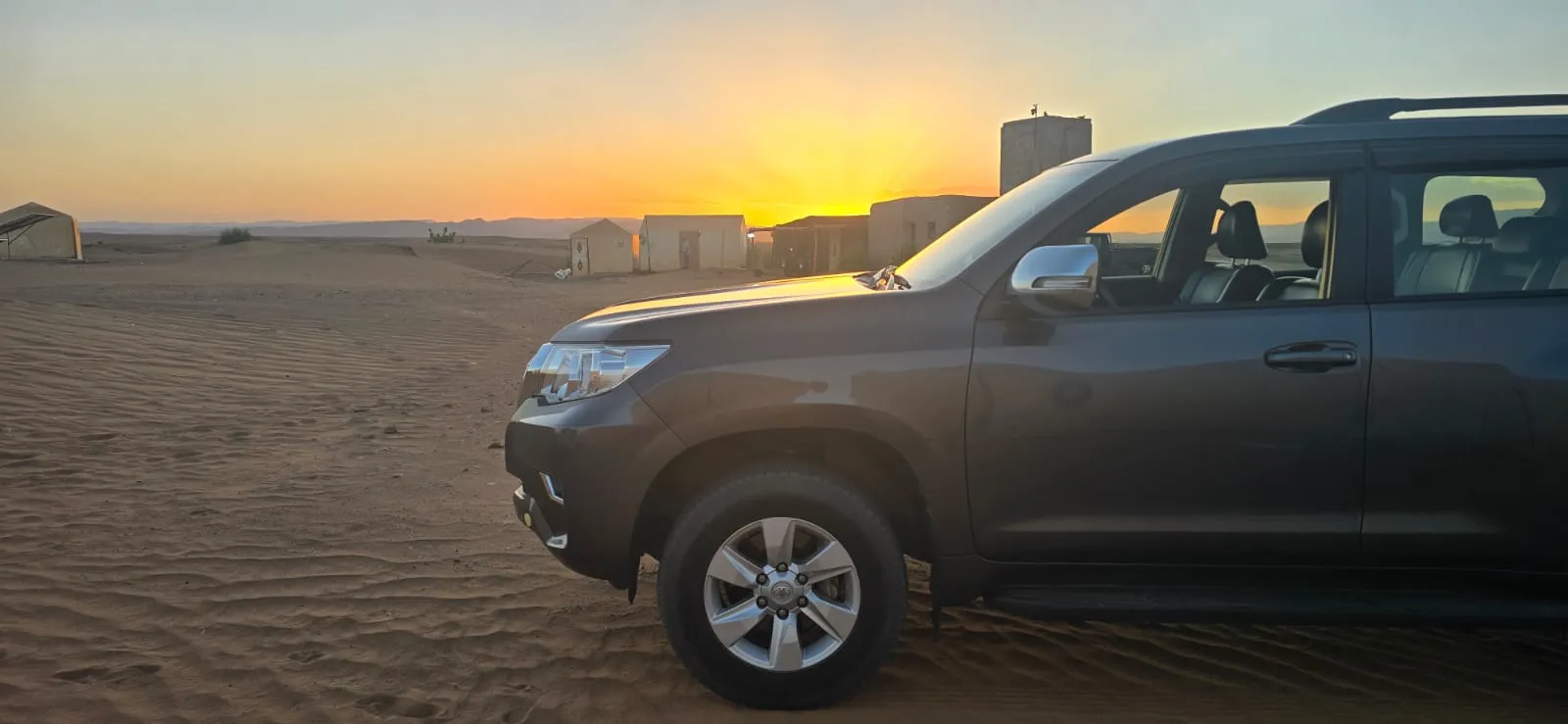
Morocco private driver tour | moroccobytours.com
A Morocco private driver tour is the single best way to see the country if you value your time and your nerves. You sit in the back, watch the Atlas Mountains roll past, and let someone who knows the roads handle the chaos. No rental desk argument. No wrong-side-of-the-roundabout panic. No circling a medina for a parking spot that does not exist. For most visitors the daily cost is less than the stress you avoid, and I will show you the rough numbers below.
Why a driver beats self-driving in Morocco
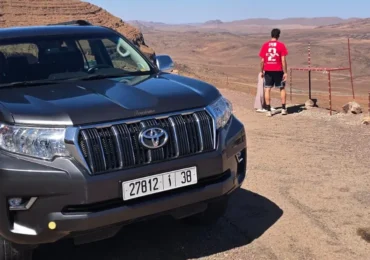
People love the idea of a self-drive road trip. I get it. You picture stopping wherever you want, music up, windows down. Then you land at the airport and realize Moroccan driving is a contact sport. Roundabouts are treated as suggestions. Lane markings are decorative. Horns are a second language.
I rented a car once, in my early twenties, thinking I was clever. Within two days I had a dent in the passenger door from a scooter that appeared out of nowhere and a parking ticket I still do not understand. The fuel was cheap. Everything else was a tax on my patience.
A Morocco tour with local driver means you hand the wheel to someone who grew up on these roads. Your only job is to look out the window and decide if you want mint tea at the next stop.
The High Atlas and the Tizi n’Tichka pass
What the pass is actually like
The drive from Marrakech toward Ouarzazate crosses the High Atlas on the Tizi n’Tichka pass. It climbs to about 2,260 meters. The road is narrow and switchbacked, and in winter it can ice over without warning. Trucks crawl up it in low gear. Goats stand in the lane. Local kids wave from the rock walls.
Driving it yourself is not impossible. People do. But the pass is where self-drivers white-knuckle the wheel while a Morocco tour with English speaking driver jokes about the view and points out the kasbahs you would have missed. The driver knows which pull-off has the cleanest bathroom and which roadside cafe serves actual coffee instead of sweet brown water.
When you are not the one driving, the pass becomes the highlight instead of the ordeal. The photo stops are real stops, not panic brakes. You can lean toward the window and actually see the fortified villages stacked into the hills.
Winter conditions
Winter is its own story. Snow closes the pass some weeks between December and February. A local driver checks the morning condition before you leave and reroutes through the lower Tizi n’Test road if needed. You would not know to do that until you were already stuck behind a stalled truck at altitude.
Police checkpoints are normal, not scary
On a Morocco tour with licensed guide, the driver handles every stop. He rolls down the window, hands over the papers, exchanges a few words in Arabic or French, and you are waved through.
Driving yourself, the same checkpoint is a small trial. You fumble for your passport, your rental agreement, your license. The officer asks where you are going. Your accent gives you away as a first-timer and suddenly the questions get longer. Nothing bad happens. It just eats your time and your calm.
Our drivers know the gendarmes by face on the busy routes. That familiarity is worth more than people expect. A friendly nod from the driver means the officer barely glances at the car. You sit there with your phone, untouched.
Medina parking is a special kind of misery
The medinas of Fes, Marrakech, and Chefchaouen are car-free for a reason. You cannot drive in. You park outside and walk, or you hire a kid with a cart. Finding that outside spot in Marrakech during high season is a hunt that can take forty minutes and end in a dirt lot with no marked spaces.
With a private driver, you are dropped at the gate. He waits or returns on a set time. You walk in light, no circling, no meter ticking, no tow-truck anxiety. The driver parks the car in a spot he trusts and you forget the whole problem exists.
I watched a couple in Marrakech once spend the last hour of daylight arguing with a parking attendant over a crumpled ticket. Their taxi to the airport left without them. A driver would have been standing there with the door open.
Rough cost breakdown
Driver vs self-drive: the numbers
Here is the part the brochures skip. Numbers are rough and change with season, fuel price, and how fancy your vehicle is. Treat this as a planning baseline, not a quote.
A private car with driver for a standard sedan runs about 120 to 160 euros per day. That usually covers the car, the driver, his food and basic lodging, and fuel for a normal route. A bigger 4×4 with more comfort sits around 180 to 220 euros per day.
Multi-day trips drop the per-day rate. A ten-day loop with the same driver might average 110 to 150 euros daily because the driver is not deadheading back empty.
The real cost of self-drive
Now compare. A rental car in peak season costs 40 to 70 euros per day. Fuel for a long loop, say Marrakech to Merzouga and back, runs another 120 to 180 euros total. Parking, tolls, and the occasional roadside “fee” add 30 to 50 euros. So self-drive runs roughly 70 to 120 euros per day all in, before your own lost time and stress.
The gap between self-drive and a driver is often 50 to 100 euros a day. For that you buy back every hour you would have spent white-knuckling roundabouts. On a two-week trip that is maybe 700 to 1,400 euros total. Ask yourself what your vacation time is worth. For many people the math is not close.
One more line most people forget: self-drive means you are the navigator, the driver, and the trip planner at once. You will miss turns. You will miss the turnoff to the good viewpoints. The 70 euro self-drive number assumes you never waste a tank of fuel getting lost, which is a generous assumption.
What you actually get with a licensed guide
There is a difference between a driver and a guide, and the terms get blurred in sales pitches. A driver gets you from A to B safely. A Morocco tour with licensed guide adds history, language, and access. Licensed guides pass an exam and carry a badge. In cities like Fes and Marrakech, certain sites legally require a licensed guide to enter with you.
For Private Morocco tours with local guide, you often get both: a driver for the road and a guide for the sites. That combination is what turns a photo trip into something you remember.
What if budget is tight
If budget is tight, a driver-only setup still beats self-drive by a mile. Add a half-day licensed guide in the cities where you want depth. You control the spend that way instead of paying for a guide every single day.
Tipping is its own small question. Drivers expect a tip at the end, same as restaurant staff. Plan 10 to 20 euros per day of the trip if the service was good. It is not forced, but it is the norm and the drivers talk.
Cultural insight you only get from the front seat
A good driver is a quiet teacher. Mine once pulled over near a village so I could watch women kneeling by the river beating rugs clean. He explained the irrigation share system that Berber communities have run for centuries, where each family gets water for a set number of hours. Try learning that from a rental car GPS.
Drivers also shield you from the harder parts of being a tourist. They shoo the fake “guides” who attach themselves at monuments. They tell you the real price of a carpet before you walk into the cooperative. They translate the menu. None of that shows up in a cost line, but it is the reason people book Private Morocco tours with local guide and come back.
On a long drive the conversation drifts. You learn which towns send their sons to work in France. You learn why the king’s portrait is in every shop. You learn that the “free” tea offered on a random roadside stop is never free. That kind of knowledge is not in the guidebook because the guidebook writer was also being watched by someone selling something.
The myth that a driver is only for the rich
Travel forums push the idea that private drivers are a luxury for people who will not touch public transport. That framing is wrong and it costs budget travelers good trips.
Furthermore, a private driver split across a family of four is often cheaper per head than first-class train tickets plus taxis plus the inevitable guided tours you book on the ground anyway. Two couples sharing one car is a bargain. Solo travelers pay more, yes, but even then the peace of mind has a price that is not silly.
The real luxury is not the leather seats. It is not negotiating with a grand taxi at 11 pm in a town you cannot pronounce. The luxury is arriving where you meant to arrive, when you meant to.
I have met backpackers who insisted on the bus and the train to save money, then paid more in wasted days and missed sites than a driver would have cost. The bus does not wait for you at the kasbah. The train does not stop at the dunes.
Self-drive makes sense in exactly two cases
I am not anti-car. Self-drive works if you have serious desert or mountain experience and you want to camp far off the mapped routes. It also works if your whole plan is one city and you park the car for days.
For a first trip, or any trip with a fixed list of towns, the driver wins. The roads are fine. The signage is not. The other drivers are the variable you cannot train for.
A note on the small roads
Google Maps in rural Morocco will cheerfully send you down a track that ends at a riverbed. A driver knows the track is a dry riverbed only in summer. That single piece of knowledge is worth more than the whole rental.
Before you book, read the official travel notes
Check the U.S. State Department page for current road and safety advisories before you commit to any driving plan. Conditions shift with seasons and regions. Lonely Planet’s Morocco coverage is solid for route context and what is open. And TripAdvisor’s Morocco pages carry recent traveler reports on specific drivers and guides, which is the fastest way to spot a bad operator before you pay.
Do not skip this step. A five minute read on travel.state.gov can tell you which border areas to avoid that month. The driver handles the road, but you should know the broad picture before you go.
How to pick a good driver without getting burned
What to ask before you pay
Ask for the driver’s license number and the car registration before you pay a deposit. Real operators send both without hesitation. If the person on the other end of the email cannot name the towns on your route, keep looking.
Moreover, read the dates on reviews. A string of five star reviews from 2019 tells you nothing about the operator running the car today. Look for reports from the last six months that mention the driver by name.
Avoid anyone who insists you pay the full amount in cash on arrival with no receipt. A deposit plus a written itinerary is normal. A demand for everything up front is a flag.
Plan your route with someone who lives it
A Morocco private driver tour is not a fixed bus script. You set the stops. Want three hours at Ait Benhaddou and a long lunch in a quiet town? Say so. Want to skip the tourist carpet pitch and find the local hammam instead? The driver knows where.
So, if you want the whole thing built around you, start from a custom plan and let the route follow your interests instead of a brochure’s. Most people begin from Marrakech tours because the city is the usual entry point and the road options out of it are the best in the country.
The blunt version
Renting a car in Morocco is cheap on paper and expensive in practice. A private driver costs more per day and gives back every minute you would have spent lost, stressed, or parked illegally. The gap is smaller than people think, the comfort is larger than they expect, and the cultural access is the part nobody puts in the brochure. Book the driver. Keep the rental idea for a trip where the destination is the drive itself.
Finally, ready to stop stressing about the road? Book your Morocco private driver tour and let someone who knows the passes handle the wheel while you watch the country go by.